
Comparing and Contrasting: Manhole Odor Inserts v. Manhole Inflow Protectors
Manholes are access points—not just for maintenance crews, but also for air, water, and all the chemistry that comes with a working collection system. When odor complaints pop up around a particular manhole, it’s tempting to reach for whatever “seals it up.” But sealing and odor control aren’t the same thing. Two products that often get lumped together are manhole odor inserts and manhole inflow protectors. They can look similar from the surface, but they solve different problems, and using one as a substitute for the other can create expensive unintended consequences.
Below is a practical comparison of both approaches, and why an inflow protector is a poor choice as an odor control device—especially in systems where hydrogen sulfide (H2S) is present.
What Each Device Is Designed to Do
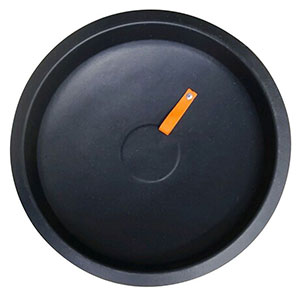
Manhole Inflow Protectors (Purpose: Prevent Stormwater/Inflow)
Inflow protectors (often called inflow dishes, inflow defenders, rain shields, or I/I inserts) are designed to prevent or reduce stormwater inflow through pick holes or lid openings during rain events, washdowns, or flooding conditions. Their goals are:
- Reduce I/I (inflow and infiltration) from surface sources.
- Prevent debris, sand, and runoff from entering the system.
- Help maintain capacity at the plant and in the collection network during wet weather.
The key concept: inflow protectors are about keeping water out, not treating gas.
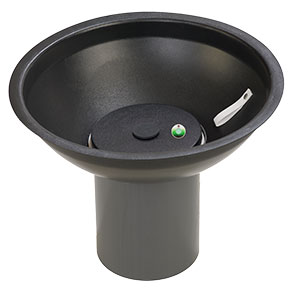
Manhole Odor Inserts (Purpose: Reduce Odor Escape)
Manhole odor inserts are engineered specifically to reduce nuisance odors at the source—typically at the manhole frame and cover interface or through pick holes and vents. Depending on the design, they may:
- Use a chemical scrubber media (often activated carbon or specialized impregnated media) to adsorb odor compounds.
- Use gasketing and bypass control to direct airflow through treatment media rather than letting it “short-circuit” out of pick holes.
- Reduce odor release while still allowing the system to breathe to some degree, especially in designs that treat rather than fully block airflow.
The key concept: odor inserts aim to treat or manage odorous air, not simply trap it.
Similar Appearance, Different Performance
From the field, the confusion is understandable. Many inflow protectors and odor inserts sit under the lid and may be installed without altering the frame. Some even resemble a “pan” or “dish.” But their internal mechanics and intent differ.
Odor inserts are typically designed with:
- A media bed or cartridge (or accommodation for media)
- Controlled airflow paths
- Seals positioned to stop uncontrolled bypass
- Replaceable components based on odor loading
Inflow protectors are typically designed with:
- A deflection surface or pan
- Drain paths that direct surface water away from openings
- Gaskets aimed at limiting inflow routes
- No media and no odor compound removal capability
If you put them in the same bucket, you risk selecting a device that “works” for one metric (less smell at that exact lid today) while worsening the underlying conditions that create odors and corrosion.
Why Inflow Protectors Shouldn’t Be Used as Odor Control Devices
1) Trapping H2S Can Accelerate Corrosion Where It Matters
Hydrogen sulfide is not just a “bad smell.” In sewer environments, H2S can oxidize (often with microbial help) into sulfuric acid on moist concrete surfaces, which is the classic pathway for crown corrosion in manholes and upstream structures.
When you use an inflow protector as an odor device, you’re essentially saying: “Let’s reduce odor complaints by sealing the exit.” But if the seal reduces ventilation and air exchange, you can end up holding H2S-laden air in the headspace longer. That increases the time the gas spends in contact with:
- Concrete and mortar
- Coatings and linings
- Metal steps, frames, and hardware
- Nearby structures that share the same gas phase
Odor control should reduce exposure, not extend it. The “out of sight, out of mind” approach can push the chemistry in the wrong direction.
2) The Gas Doesn’t Disappear—It Redistributes
A collection system is a connected network. If you restrict a natural exit point at one manhole without treating the air, the gas still needs somewhere to go. Two likely outcomes:
- Pressurization/redirected flow: Odorous air finds the next easiest path—another manhole, vent, building connection, or a point with a looser cover fit.
- Migration to a more sensitive location: The “next exit” might be closer to businesses, pedestrian areas, schools, parks, or residences—creating a new complaint cluster in a place that’s harder to manage politically and operationally.
In other words, you may not solve the odor problem. You may simply move it.
3) Inflow Protectors Don’t Remove Odor Compounds
Even in the best case, an inflow protector can only reduce the immediate escape of air at that lid. It does nothing to reduce:
- Total H2S generation in the wastewater
- Odor concentration in the headspace
- Corrosive potential of the gas phase
Odor inserts that use media can actually reduce odor compound mass by adsorption. That distinction matters. Blocking a pathway is not the same as reducing emissions.
4) Ventilation Dynamics Are Part of System Health
Manholes and vents play a role in how sewer gases move and exchange with the atmosphere. Over-sealing a segment can contribute to:
- Increased headspace concentration swings
- Unpredictable odor releases elsewhere
- Potential impacts to trap seals in building plumbing in certain scenarios (especially where pressure transients occur)
This doesn’t mean every manhole must be wide open; it means you should be intentional. If you need to limit emissions at a specific location, treating the air is usually safer than trapping it.
5) You Can Create a “Corrosion Hot Spot”
If an inflow protector reduces air turnover and keeps a moist, warm, H2S-rich headspace stagnant, you can create ideal conditions for corrosion at that structure. That can show up as:
- Accelerated crown loss
- Coating failures
- Hardware deterioration
- More frequent rehab needs
The cost of premature manhole rehabilitation can dwarf the cost of doing odor control correctly in the first place.
Where Inflow Protectors Do Make Sense
None of this is to say inflow protectors are “bad.” They’re valuable when the problem is wet-weather inflow or debris entry—especially in systems chasing capacity issues, SSOs, or treatment plant peak flow constraints.
Use an inflow protector when:
- The manhole is in a flood-prone area
- Pick holes are a known inflow source
- There’s heavy surface runoff or washdown exposure
- The utility has an I/I reduction program with measurable flow targets
Just don’t mistake that function for odor treatment.
Where Odor Inserts Make Sense
Odor inserts are appropriate when:
- Odor complaints are localized to a lid area
- H2S or odor compounds are present and need reduction at that emission point
- You want a targeted, maintainable control method without chemical dosing upstream
- You need a solution that reduces emissions without forcing gases to relocate
They also have operational tradeoffs: media has a service life, performance depends on loading, and they must be maintained. But at least the approach aligns with the goal: reduce odor compound release and/or exposure, not simply trap it.
Practical Rule of Thumb
If your goal is I/I reduction: choose an inflow protector.
If your goal is odor and corrosion risk reduction: choose an odor control approach that treats air or reduces H2S generation—not one that seals and hopes.
Using an inflow protector as an odor control device is a bit like putting tape over a smoke detector: you may get temporary relief from the symptom, but you haven’t improved conditions—and you may have made them worse.